
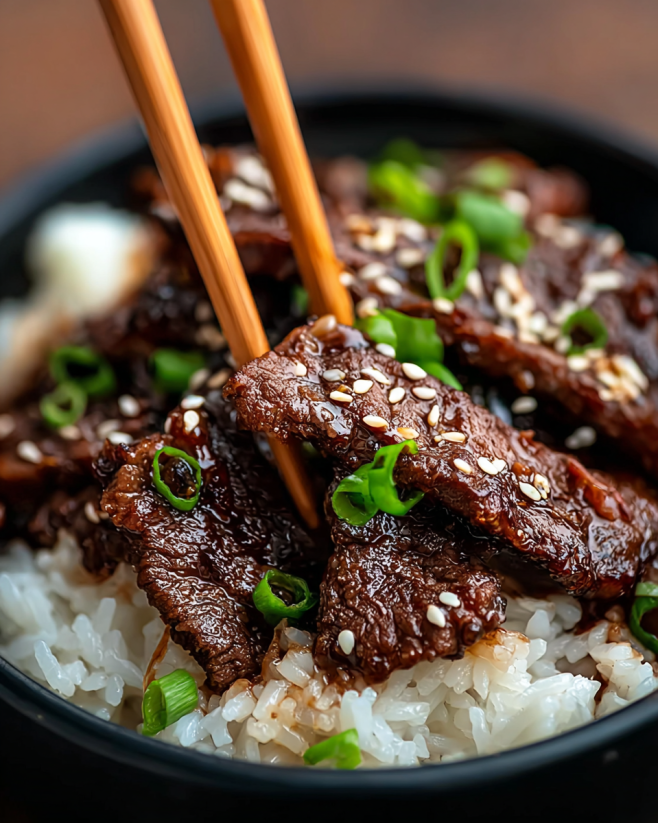
Introduction to Korean Beef Bulgogi Recipe
Korean Beef Bulgogi is a delightful dish that brings a burst of flavor to your table. This traditional Korean recipe features tender slices of beef marinated in a savory-sweet sauce. The combination of soy sauce, brown sugar, and gochujang creates a unique taste that is both rich and satisfying. Bulgogi, which means “fire meat” in Korean, is often grilled or stir-fried, making it a versatile option for any meal.
Not only is this dish delicious, but it is also quick and easy to prepare. With just a few simple ingredients, you can create a restaurant-quality meal right in your kitchen. Whether you’re hosting a dinner party or enjoying a cozy night in, Korean Beef Bulgogi is sure to impress your family and friends.
This recipe is perfect for those who love bold flavors and want to explore Korean cuisine. The marinated beef is cooked to perfection, resulting in a dish that is juicy and full of umami. Plus, it pairs wonderfully with steamed rice and fresh vegetables, making it a complete meal.
In this article, we will guide you through the ingredients, preparation steps, and tips for making the best Korean Beef Bulgogi. So, roll up your sleeves and get ready to enjoy a taste of Korea right at home!
Ingredients for Korean Beef Bulgogi Recipe
To create a mouthwatering Korean Beef Bulgogi, you’ll need a selection of fresh ingredients that come together to form a delicious marinade and flavorful dish. Here’s what you’ll need:
- 1 pound beef sirloin: Thinly sliced for tender bites.
- 1/4 cup soy sauce: This adds a savory depth to the marinade.
- 2 tablespoons brown sugar: For a touch of sweetness that balances the flavors.
- 1 tablespoon sesame oil: This gives a nutty aroma and richness.
- 3 cloves garlic: Minced for a robust flavor.
- 1 teaspoon fresh ginger: Grated to add a hint of spice.
- 1 tablespoon rice vinegar: This adds a tangy note to the marinade.
- 1 tablespoon gochujang: Korean chili paste for a spicy kick.
- 1/4 teaspoon black pepper: For a subtle heat.
- 2 green onions: Chopped for garnish and freshness.
- 1 tablespoon sesame seeds: Toasted for a crunchy finish.
- 1 tablespoon vegetable oil: For cooking the beef.
These ingredients come together to create a delightful balance of flavors. The marinade is the star of the show, infusing the beef with a savory-sweet taste that is simply irresistible. Make sure to use fresh ingredients for the best results. Now that you have everything ready, let’s move on to the preparation steps!
Step-by-Step Preparation of Korean Beef Bulgogi Recipe
Now that you have gathered all the ingredients, it’s time to dive into the preparation of your Korean Beef Bulgogi. This step-by-step guide will help you create a delicious dish that is sure to impress. Let’s get started!
Step 1: Marinating the Beef
First, you need to marinate the beef. In a large bowl, combine the soy sauce, brown sugar, sesame oil, minced garlic, grated ginger, rice vinegar, gochujang, and black pepper. Whisk these ingredients together until the sugar dissolves completely. This marinade is what gives the beef its amazing flavor.
Next, add the thinly sliced beef sirloin to the marinade. Make sure each piece is well coated. Cover the bowl with plastic wrap and place it in the refrigerator. Let the beef marinate for at least 30 minutes. For even more flavor, you can let it sit for up to 2 hours. The longer it marinates, the tastier it will be!
Step 2: Preparing the Vegetables
While the beef is marinating, it’s a great time to prepare your vegetables. Chop the green onions and set them aside for garnish. You can also prepare any additional vegetables you want to serve with your bulgogi. Some popular choices include bell peppers, carrots, or broccoli. These will add color and nutrition to your meal.
Having everything ready will make the cooking process smoother. Plus, it’s always nice to have fresh veggies on the side!
Step 3: Cooking the Beef
Once the beef has marinated, it’s time to cook! Heat a tablespoon of vegetable oil in a large skillet over medium-high heat. Remove the beef from the marinade, allowing any excess marinade to drip off. Place the beef in the skillet in a single layer. You may need to cook it in batches to avoid overcrowding the pan.
Cook the beef for about 2-3 minutes on each side. You want it to be browned and cooked through. The sizzling sound will let you know it’s cooking perfectly! Once done, transfer the beef to a plate.
Step 4: Serving the Dish
Now comes the fun part—serving your delicious Korean Beef Bulgogi! Sprinkle the cooked beef with the chopped green onions and sesame seeds for a lovely finish. Serve it immediately with steamed rice and your choice of vegetables. This dish is best enjoyed hot, so dig in while it’s fresh!
With these simple steps, you’ve created a delightful Korean Beef Bulgogi that’s bursting with flavor. Enjoy your meal and the compliments that are sure to follow!
Variation of Korean Beef Bulgogi Recipe
While the classic Korean Beef Bulgogi recipe is delicious on its own, there are many ways to switch things up! You can experiment with alternative ingredients and different cooking methods to create your own unique version. Let’s explore some exciting variations!
Alternative Ingredients for Korean Beef Bulgogi Recipe
Sometimes, you might not have all the ingredients on hand, or you may want to try something new. Here are some alternative ingredients you can use:
- Beef Alternatives: If you prefer a different protein, try using chicken, pork, or even shrimp. Each option will bring its own flavor to the dish.
- Vegetarian Option: For a meatless meal, substitute the beef with thinly sliced mushrooms or tofu. Both options absorb the marinade well and provide a satisfying texture.
- Sweeteners: If you want a sweeter taste, consider using honey or maple syrup instead of brown sugar. This will add a unique twist to the flavor.
- Spice Level: Adjust the amount of gochujang to control the heat. If you like it spicier, add more; if you prefer milder, reduce the amount.
- Vegetables: Feel free to add other vegetables to the marinade, such as bell peppers, zucchini, or snap peas. They will add color and crunch to your dish.
These alternatives allow you to customize your Korean Beef Bulgogi to suit your taste preferences or dietary needs. Don’t hesitate to get creative!
Different Cooking Methods for Korean Beef Bulgogi Recipe
While the traditional method for cooking Korean Beef Bulgogi is stir-frying, there are other cooking techniques you can try. Each method offers a different flavor and texture:
- Grilling: For a smoky flavor, grill the marinated beef on an outdoor grill or a grill pan. This method gives the beef a delicious char and enhances the overall taste.
- Baking: Preheat your oven to 400°F (200°C) and spread the marinated beef on a baking sheet. Bake for about 15-20 minutes, flipping halfway through. This method is great for cooking larger batches.
- Slow Cooking: For a tender and flavorful dish, use a slow cooker. Add the marinated beef and cook on low for 6-8 hours. This method allows the flavors to meld beautifully.
- Stovetop Pressure Cooking: If you’re short on time, use a pressure cooker. Cook the marinated beef for about 10 minutes under high pressure for a quick and tasty meal.
By trying these different cooking methods, you can enjoy Korean Beef Bulgogi in various ways. Each technique brings out unique flavors, making your dining experience even more enjoyable!
Cooking Note for Korean Beef Bulgogi Recipe
When preparing your Korean Beef Bulgogi, there are a few important cooking notes to keep in mind. These tips will help ensure that your dish turns out perfectly every time. Let’s dive into some key points to consider!
First, the cut of beef you choose can greatly affect the tenderness of your dish. Beef sirloin is a popular choice due to its balance of flavor and tenderness. However, you can also use flank steak or ribeye for a richer taste. Just remember to slice the beef thinly against the grain. This technique helps break down the muscle fibers, resulting in a more tender bite.
Next, marinating the beef is crucial. The longer you let it sit in the marinade, the more flavorful it will become. If you have the time, aim for at least 2 hours in the refrigerator. This allows the flavors to penetrate the meat deeply, enhancing the overall taste.
When cooking, avoid overcrowding the skillet. If you add too much beef at once, it can steam instead of sear. This will prevent that delicious browning that adds flavor. Instead, cook in batches if necessary, ensuring each piece gets the attention it deserves.
Lastly, keep an eye on the cooking time. Overcooking the beef can lead to a tough texture. Aim for a quick cook time of 2-3 minutes per side. The beef should be browned and just cooked through for the best results.
By following these cooking notes, you’ll be well on your way to creating a mouthwatering Korean Beef Bulgogi that will impress everyone at your table. Happy cooking!
Serving Suggestions for Korean Beef Bulgogi Recipe
Now that you’ve prepared your delicious Korean Beef Bulgogi, it’s time to think about how to serve it! This dish is not only flavorful but also versatile, making it easy to pair with various sides and accompaniments. Here are some delightful serving suggestions to elevate your meal:
- Steamed Rice: A classic pairing, steamed white or brown rice is perfect for soaking up the savory sauce of the bulgogi. You can also try jasmine or sticky rice for a different texture.
- Korean Side Dishes: Serve your bulgogi with traditional banchan, such as kimchi, pickled radishes, or seasoned spinach. These sides add a refreshing contrast to the rich flavors of the beef.
- Vegetable Stir-Fry: A colorful stir-fry of bell peppers, carrots, and broccoli complements the bulgogi beautifully. The crunch of the vegetables adds a nice texture to the meal.
- Lettuce Wraps: For a fun and interactive dining experience, serve the bulgogi in lettuce leaves. Guests can wrap the beef with rice and vegetables, creating their own delicious bites.
- Egg Fried Rice: For a twist, try serving the bulgogi with egg fried rice. The eggs add richness and flavor, making it a hearty option.
- Sesame Noodles: Cold sesame noodles tossed in a light sauce can be a refreshing side. The nutty flavor of sesame oil pairs well with the bulgogi.
These serving suggestions not only enhance the overall dining experience but also allow you to customize your meal to suit your preferences. Whether you choose to keep it traditional or mix it up with creative sides, your Korean Beef Bulgogi is sure to be a hit!
Tips for Perfecting Your Korean Beef Bulgogi Recipe
To make your Korean Beef Bulgogi truly shine, consider these helpful tips. They will guide you in achieving the best flavor and texture, ensuring your dish is a hit every time!
- Choose the Right Cut: As mentioned earlier, beef sirloin is a great choice. However, flank steak or ribeye can also work well. These cuts are tender and flavorful, making them perfect for bulgogi.
- Slice Against the Grain: When slicing the beef, always cut against the grain. This technique helps break down the muscle fibers, resulting in a more tender bite. Thin slices are key!
- Marinate Longer: For the best flavor, let the beef marinate for at least 2 hours. If you can, marinate it overnight. This allows the flavors to penetrate deeply, making the beef even tastier.
- Use Fresh Ingredients: Fresh garlic, ginger, and green onions can elevate the dish. They add vibrant flavors that enhance the overall taste of your bulgogi.
- Don’t Overcrowd the Pan: When cooking, avoid adding too much beef at once. Overcrowding can cause the beef to steam instead of sear. Cook in batches to achieve that perfect browning.
- Watch the Cooking Time: Keep an eye on the beef while it cooks. Aim for 2-3 minutes per side. Overcooking can lead to tough meat, so remove it from the heat as soon as it’s browned and cooked through.
- Garnish Generously: Don’t skip the green onions and sesame seeds! They add a lovely crunch and freshness to the dish. A sprinkle of these toppings makes your bulgogi visually appealing too.
- Serve Hot: Korean Beef Bulgogi is best enjoyed hot. Serve it immediately after cooking to ensure the flavors are at their peak. This way, you’ll enjoy the juiciness of the beef!
By following these tips, you’ll be well on your way to perfecting your Korean Beef Bulgogi recipe. Each step contributes to a delicious and satisfying meal that everyone will love. Happy cooking!
Breakdown of Time for Korean Beef Bulgogi Recipe
Understanding the time needed for each step in your Korean Beef Bulgogi recipe is essential for planning your meal. Here’s a simple breakdown of the time required for preparation and cooking. This will help you manage your time effectively and ensure everything is ready to serve at the right moment!
Prep Time
The prep time for Korean Beef Bulgogi is relatively short. Here’s what to expect:
- Marinating the Beef: 30 minutes to 2 hours (the longer, the better for flavor).
- Preparing Ingredients: 10-15 minutes to chop vegetables and gather everything.
In total, the prep time can range from 40 minutes to 2 hours and 15 minutes, depending on how long you choose to marinate the beef.
Cooking Time
Cooking the beef is quick and straightforward. Here’s the breakdown:
- Cooking the Beef: Approximately 6-10 minutes (2-3 minutes per side).
So, the cooking time is about 10 minutes, making it a fast dish to prepare once the beef is marinated.
Total Time
When you combine the prep and cooking times, you get the total time for your Korean Beef Bulgogi:
- Total Time: Ranges from 50 minutes to 2 hours and 25 minutes.
This total time includes the marinating period, which is flexible based on your schedule. Whether you have a little or a lot of time, you can still enjoy this delicious dish!
Nutritional Information for Korean Beef Bulgogi Recipe
Understanding the nutritional content of your meals is essential for maintaining a balanced diet. Korean Beef Bulgogi is not only delicious but also provides a good source of protein and other nutrients. Here’s a breakdown of the nutritional information per serving:
Calories
Each serving of Korean Beef Bulgogi contains approximately 290 calories. This makes it a satisfying option for a main dish without being overly heavy. The combination of beef and marinade contributes to the calorie count, providing energy for your day.
Protein
Protein is a vital nutrient for building and repairing tissues. In this recipe, you’ll find about 28 grams of protein per serving. The beef sirloin is an excellent source of high-quality protein, making this dish a great choice for those looking to increase their protein intake.
Sodium
Sodium is an important mineral, but it’s essential to consume it in moderation. Each serving of Korean Beef Bulgogi contains around 800 milligrams of sodium. Most of this comes from the soy sauce used in the marinade. If you’re watching your sodium intake, consider using low-sodium soy sauce to reduce the overall sodium content without sacrificing flavor.
Overall, Korean Beef Bulgogi is a nutritious meal option that offers a balance of calories, protein, and flavor. Enjoying this dish as part of a well-rounded diet can contribute to your overall health and well-being!
FAQs about Korean Beef Bulgogi Recipe
What is the best cut of beef for Korean Beef Bulgogi Recipe?
The best cut of beef for Korean Beef Bulgogi is typically beef sirloin. This cut is tender and flavorful, making it perfect for marinating and quick cooking. However, you can also use flank steak or ribeye for a richer taste. Just remember to slice the beef thinly against the grain. This technique helps ensure that each bite is tender and easy to chew.
Can I make Korean Beef Bulgogi Recipe ahead of time?
Yes, you can make Korean Beef Bulgogi ahead of time! The marinated beef can be prepared a day in advance. Simply marinate the beef and store it in the refrigerator until you’re ready to cook. This allows the flavors to develop even more. When you’re ready to serve, just cook the beef as directed. It’s a great way to save time on busy days!
Is Korean Beef Bulgogi Recipe spicy?
Korean Beef Bulgogi can be spicy, but it depends on how much gochujang (Korean chili paste) you use in the marinade. If you prefer a milder flavor, you can reduce the amount of gochujang or even omit it altogether. The dish will still be delicious without the heat. On the other hand, if you love spice, feel free to add more gochujang to kick up the heat!
What can I serve with Korean Beef Bulgogi Recipe?
There are many delicious options to serve with Korean Beef Bulgogi! A classic choice is steamed rice, which pairs perfectly with the savory flavors of the beef. You can also serve it with traditional Korean side dishes like kimchi, pickled vegetables, or seasoned spinach. For a fresh touch, consider adding a vegetable stir-fry or lettuce wraps. These sides not only complement the bulgogi but also create a well-rounded meal.
Conclusion on Korean Beef Bulgogi Recipe
In conclusion, Korean Beef Bulgogi is a delightful dish that brings the vibrant flavors of Korean cuisine right to your kitchen. With its tender beef marinated in a savory-sweet sauce, this recipe is not only easy to prepare but also incredibly satisfying. Whether you’re a seasoned cook or a beginner, you can create a restaurant-quality meal that will impress your family and friends.
The versatility of this dish allows for numerous variations, whether you choose to experiment with different proteins or cooking methods. Plus, the serving suggestions provide endless possibilities for pairing, making each meal unique and enjoyable. From steamed rice to fresh vegetables, every bite is a celebration of flavor.
As you embark on your culinary journey with this Korean Beef Bulgogi recipe, remember to embrace the process. Take your time with the marinating, enjoy the cooking, and savor the delicious results. With the tips and variations provided, you can perfect your dish and make it your own.
So, gather your ingredients, roll up your sleeves, and get ready to enjoy a taste of Korea. Your kitchen is about to be filled with mouthwatering aromas, and your dining table will be a place of joy and satisfaction. Happy cooking!
Korean Beef Bulgogi
Ingredients
Equipment
Method
- Marinate the beef by combining soy sauce, brown sugar, sesame oil, minced garlic, grated ginger, rice vinegar, gochujang, and black pepper in a bowl. Add the beef and coat well. Cover and refrigerate for at least 30 minutes.
- Prepare the vegetables by chopping green onions and any additional vegetables you want to serve.
- Heat vegetable oil in a skillet over medium-high heat. Remove beef from marinade and cook in batches for 2-3 minutes on each side until browned.
- Serve the cooked beef with chopped green onions and sesame seeds, alongside steamed rice and vegetables.
