
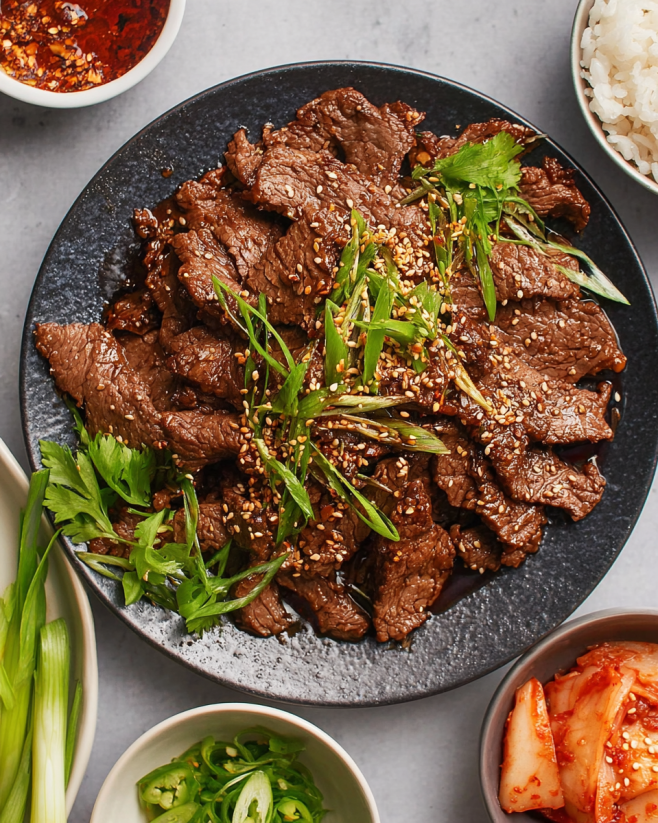
Introduction to Korean Beef Bulgogi Recipe
What is Bulgogi?
Bulgogi is a popular Korean dish that features marinated beef, typically grilled or stir-fried. The name “bulgogi” translates to “fire meat,” which reflects its traditional cooking method over an open flame. This dish is known for its tender texture and rich flavor, thanks to a marinade made from soy sauce, sugar, sesame oil, and various spices. The thinly sliced beef absorbs these flavors, making each bite a delightful experience. Bulgogi can be served in many ways, but it is often enjoyed with rice and fresh vegetables.
The Cultural Significance of Korean Beef Bulgogi
Korean Beef Bulgogi holds a special place in Korean cuisine and culture. It is often served during celebrations and family gatherings, symbolizing togetherness and joy. The dish is not just about the food; it represents the warmth of Korean hospitality. Traditionally, families would gather around a grill, cooking the marinated beef together, sharing stories, and enjoying each other’s company. This communal aspect of eating bulgogi makes it more than just a meal; it’s an experience that fosters connections among loved ones. Today, bulgogi has gained international popularity, allowing people around the world to enjoy a taste of Korean culture.
Ingredients for Korean Beef Bulgogi Recipe
Essential Ingredients
To create a delicious Korean Beef Bulgogi, you’ll need a few key ingredients. These components work together to deliver the authentic flavors that make this dish so beloved. Here’s what you’ll need:
- 1 pound flank steak: Thinly sliced against the grain for tenderness.
- 1/4 cup soy sauce: This adds a savory depth to the marinade.
- 2 tablespoons brown sugar: For a touch of sweetness that balances the saltiness.
- 1 tablespoon sesame oil: This gives a nutty flavor that enhances the dish.
- 2 teaspoons minced garlic: Adds a fragrant kick to the marinade.
- 1 teaspoon minced ginger: Provides a warm, spicy note.
- 1 tablespoon rice vinegar: This adds acidity, brightening the flavors.
- 1 tablespoon gochujang: A Korean red chili paste that brings heat and depth.
- 1 tablespoon vegetable oil: For cooking the beef.
- 1/4 cup green onions: Chopped for garnish and added freshness.
- 1 tablespoon sesame seeds: Toasted for a crunchy finish.
Optional Ingredients for Customization
While the essential ingredients create a fantastic base for your Korean Beef Bulgogi, you can customize the dish to suit your taste. Here are some optional ingredients you might consider:
- Extra brown sugar: For those who prefer a sweeter flavor, add an extra tablespoon.
- Different cuts of beef: Substitute flank steak with sirloin or ribeye for varied textures.
- Vegetables: Add sliced bell peppers, mushrooms, or carrots for extra nutrition and flavor.
- Spices: Incorporate black pepper or red pepper flakes for additional heat.
- Herbs: Fresh cilantro or mint can add a refreshing twist.
Feel free to experiment with these optional ingredients to make the dish your own. The beauty of Korean Beef Bulgogi lies in its versatility, allowing you to create a meal that suits your palate perfectly.
Step-by-Step Preparation of Korean Beef Bulgogi Recipe
Step 1: Marinating the Beef
The first step in making a delicious Korean Beef Bulgogi is marinating the beef. Start by gathering your flank steak and slicing it thinly against the grain. This technique ensures that the meat remains tender. In a large bowl, combine the soy sauce, brown sugar, sesame oil, minced garlic, minced ginger, rice vinegar, and gochujang. Whisk these ingredients together until the sugar dissolves completely. Once your marinade is ready, add the sliced beef, making sure each piece is well coated. Cover the bowl with plastic wrap and refrigerate for at least 30 minutes. For a deeper flavor, you can marinate the beef for up to 2 hours.
Step 2: Preparing the Vegetables
While the beef marinates, it’s time to prepare the vegetables. Chop the green onions into small pieces, as they will be used for garnish later. If you choose to add any optional vegetables, like bell peppers or mushrooms, slice them into thin strips. These vegetables not only add color but also enhance the dish’s flavor and nutrition. Set the prepared vegetables aside, ready to be added during cooking.
Step 3: Cooking the Beef
Once the marinating time is up, it’s time to cook the beef. Heat a large skillet or grill pan over medium-high heat and add the vegetable oil. When the oil is hot, carefully add the marinated beef in a single layer. If your pan is small, cook the beef in batches to avoid overcrowding. Cook for about 3-4 minutes, stirring occasionally. You want the beef to be browned and cooked through. Once done, remove the skillet from heat. The aroma will be irresistible!
Step 4: Serving the Dish
Now that your Korean Beef Bulgogi is cooked, it’s time to serve! Transfer the beef to a serving platter and sprinkle it with the chopped green onions and toasted sesame seeds. This adds a lovely crunch and freshness. For a traditional touch, serve the bulgogi with cooked rice and lettuce leaves. Diners can wrap the beef in the lettuce, creating a delightful bite. Enjoy your homemade Korean Beef Bulgogi with family and friends!
Variations of Korean Beef Bulgogi Recipe
Spicy Bulgogi Variation
If you love a bit of heat, the Spicy Bulgogi variation is perfect for you! To make this version, simply increase the amount of gochujang in your marinade. Instead of one tablespoon, try adding two tablespoons for a fiery kick. You can also include some red pepper flakes to enhance the spice level even further. This variation is great for those who enjoy bold flavors. Additionally, consider marinating the beef with sliced jalapeños or other spicy peppers for an extra layer of heat. The result is a deliciously spicy dish that will tantalize your taste buds!
Vegetarian Bulgogi Option
For those who prefer a meat-free meal, a Vegetarian Bulgogi option is a fantastic choice. Instead of beef, you can use thinly sliced mushrooms, tofu, or even eggplant. These ingredients absorb the marinade beautifully, providing a similar flavor profile to traditional bulgogi. To prepare, follow the same marinating process using the soy sauce, brown sugar, sesame oil, and other ingredients. Cook the marinated vegetables or tofu in the same way as the beef, ensuring they are well-cooked and flavorful. This vegetarian version is not only delicious but also packed with nutrients, making it a healthy alternative for everyone!
Cooking Note for Korean Beef Bulgogi Recipe
Tips for Perfectly Cooked Bulgogi
Cooking Korean Beef Bulgogi to perfection requires attention to detail. Here are some helpful tips to ensure your dish turns out delicious every time:
- Slice Against the Grain: Always slice the flank steak against the grain. This technique helps to break down the muscle fibers, resulting in tender meat.
- Marinate for Flavor: Don’t rush the marinating process. Allowing the beef to soak in the marinade for at least 30 minutes enhances the flavor. For the best results, aim for 2 hours.
- Use High Heat: Cooking the beef over medium-high heat is crucial. This method helps to sear the meat quickly, locking in juices and creating a nice caramelized exterior.
- Avoid Overcrowding: When cooking, avoid overcrowding the pan. If necessary, cook the beef in batches. This ensures even cooking and prevents steaming.
- Check for Doneness: Keep an eye on the beef while it cooks. It should be browned and cooked through in about 3-4 minutes. Overcooking can lead to tough meat.
- Garnish Generously: Don’t skip the garnishes! Chopped green onions and sesame seeds add flavor and visual appeal. They make your dish look as good as it tastes.
By following these tips, you’ll create a mouthwatering Korean Beef Bulgogi that impresses everyone at the table. Enjoy the process and savor the delightful flavors of this beloved dish!
Serving Suggestions for Korean Beef Bulgogi Recipe
Traditional Accompaniments
When it comes to serving Korean Beef Bulgogi, traditional accompaniments enhance the overall dining experience. Here are some classic options:
- Steamed Rice: A bowl of fluffy white rice is a must. The rice absorbs the savory juices from the bulgogi, making each bite even more satisfying.
- Lettuce Leaves: Use fresh lettuce leaves, such as romaine or butter lettuce, for wrapping the beef. This adds a crunchy texture and freshness to each bite.
- Korean Side Dishes (Banchan): Serve with a variety of banchan, such as kimchi, pickled radishes, or seasoned spinach. These small dishes provide a burst of flavor and balance the richness of the bulgogi.
- Sesame Oil Dipping Sauce: A simple dipping sauce made from sesame oil, soy sauce, and a sprinkle of sesame seeds can elevate the dish. It adds an extra layer of flavor that complements the bulgogi beautifully.
These traditional accompaniments not only enhance the taste but also create a well-rounded meal that reflects Korean culinary culture.
Creative Serving Ideas
If you want to put a twist on your Korean Beef Bulgogi, consider these creative serving ideas:
- Bulgogi Tacos: Use soft tortillas instead of lettuce leaves. Fill them with bulgogi, fresh vegetables, and a drizzle of spicy mayo for a fusion twist.
- Bulgogi Bowls: Create a bulgogi rice bowl by layering cooked rice, bulgogi, and assorted vegetables. Top with a fried egg for added richness.
- Stuffed Peppers: Mix bulgogi with cooked rice and stuff into halved bell peppers. Bake until the peppers are tender for a colorful and nutritious dish.
- Bulgogi Sliders: Serve bulgogi on mini buns with a slice of cucumber and a dollop of gochujang mayo for a fun appetizer or party snack.
These creative ideas allow you to enjoy Korean Beef Bulgogi in new and exciting ways. Whether you stick to tradition or try something different, the flavors will surely delight your taste buds!
Tips for Making the Best Korean Beef Bulgogi Recipe
Choosing the Right Cut of Beef
When it comes to making the best Korean Beef Bulgogi, selecting the right cut of beef is crucial. The cut you choose can significantly affect the dish’s flavor and texture. Here are some tips to help you pick the perfect beef:
- Flank Steak: This is the traditional choice for bulgogi. It’s flavorful and becomes tender when sliced thinly against the grain.
- Sirloin: A great alternative, sirloin is slightly more tender and has a rich flavor. It works well for bulgogi if you prefer a different texture.
- Ribeye: Known for its marbling, ribeye adds a juicy richness to the dish. It’s perfect for those who enjoy a more decadent flavor.
- Skirt Steak: This cut is also a good option. It has a robust flavor and is best when cooked quickly over high heat.
Regardless of the cut you choose, always slice the beef thinly against the grain. This technique ensures that the meat remains tender and easy to chew. The right cut will elevate your Korean Beef Bulgogi, making it a memorable dish!
Marination Time Recommendations
Marination is a key step in achieving the best flavor for your Korean Beef Bulgogi. Here are some recommendations for marination time:
- Minimum Time: Marinate the beef for at least 30 minutes. This allows the flavors to penetrate the meat, enhancing its taste.
- Optimal Time: For the best results, aim for 1 to 2 hours of marination. This longer time allows the beef to absorb the marinade fully, resulting in a more flavorful dish.
- Overnight Option: If you have the time, marinating the beef overnight in the refrigerator can yield incredible flavor. Just be cautious not to exceed 24 hours, as the meat may become too soft.
Remember, the longer you marinate, the more intense the flavors will be. However, even a short marination can still produce a delicious Korean Beef Bulgogi. Choose the time that works best for you and enjoy the delightful flavors of this beloved dish!
Tips for Making the Best Korean Beef Bulgogi Recipe
Choosing the Right Cut of Beef
When it comes to making the best Korean Beef Bulgogi, selecting the right cut of beef is crucial. The cut you choose can significantly affect the dish’s flavor and texture. Here are some tips to help you pick the perfect beef:
- Flank Steak: This is the traditional choice for bulgogi. It’s flavorful and becomes tender when sliced thinly against the grain.
- Sirloin: A great alternative, sirloin is slightly more tender and has a rich flavor. It works well for bulgogi if you prefer a different texture.
- Ribeye: Known for its marbling, ribeye adds a juicy richness to the dish. It’s perfect for those who enjoy a more decadent flavor.
- Skirt Steak: This cut is also a good option. It has a robust flavor and is best when cooked quickly over high heat.
Regardless of the cut you choose, always slice the beef thinly against the grain. This technique ensures that the meat remains tender and easy to chew. The right cut will elevate your Korean Beef Bulgogi, making it a memorable dish!
Marination Time Recommendations
Marination is a key step in achieving the best flavor for your Korean Beef Bulgogi. Here are some recommendations for marination time:
- Minimum Time: Marinate the beef for at least 30 minutes. This allows the flavors to penetrate the meat, enhancing its taste.
- Optimal Time: For the best results, aim for 1 to 2 hours of marination. This longer time allows the beef to absorb the marinade fully, resulting in a more flavorful dish.
- Overnight Option: If you have the time, marinating the beef overnight in the refrigerator can yield incredible flavor. Just be cautious not to exceed 24 hours, as the meat may become too soft.
Remember, the longer you marinate, the more intense the flavors will be. However, even a short marination can still produce a delicious Korean Beef Bulgogi. Choose the time that works best for you and enjoy the delightful flavors of this beloved dish!
Breakdown of Time for Korean Beef Bulgogi Recipe
Prep Time
Preparing Korean Beef Bulgogi is a straightforward process. The prep time mainly involves slicing the beef and mixing the marinade. Here’s a quick breakdown:
- Slicing the Beef: 10 minutes. Thinly slice the flank steak against the grain for tenderness.
- Making the Marinade: 5 minutes. Combine soy sauce, brown sugar, sesame oil, garlic, ginger, rice vinegar, and gochujang in a bowl.
- Marinating Time: 30 minutes to 2 hours (optional). For the best flavor, marinate the beef for at least 30 minutes, but up to 2 hours is ideal.
In total, the prep time can range from 45 minutes to 2 hours and 15 minutes, depending on how long you choose to marinate the beef.
Cooking Time
Once the beef is marinated, cooking it is quick and easy. Here’s how long it takes:
- Heating the Pan: 2 minutes. Preheat your skillet or grill pan over medium-high heat.
- Cooking the Beef: 3-4 minutes. Cook the marinated beef in batches if necessary, stirring occasionally until browned and cooked through.
The total cooking time is approximately 5-6 minutes, making it a quick dish to prepare once the marination is complete.
Total Time
When you combine the prep time and cooking time, the total time for making Korean Beef Bulgogi can vary:
- Minimum Total Time: 45 minutes (if you marinate for the minimum time).
- Maximum Total Time: 2 hours and 15 minutes (if you marinate for the maximum time).
This means you can enjoy a delicious homemade Korean Beef Bulgogi in as little as 45 minutes, making it a great option for a weeknight dinner or a special occasion!
Nutritional Information for Korean Beef Bulgogi Recipe
Calories and Macronutrients
Understanding the nutritional content of your meals is essential for maintaining a balanced diet. Korean Beef Bulgogi is not only delicious but also provides a good mix of macronutrients. Here’s a breakdown of the nutritional information per serving:
- Calories: 290
- Net Carbohydrates: 8g
- Protein: 25g
- Fat: 18g
This dish is relatively low in carbohydrates, making it suitable for various dietary preferences, including low-carb diets. The protein content is high, which is beneficial for muscle repair and growth. The healthy fats from sesame oil and the beef contribute to satiety, helping you feel full longer.
Health Benefits of Ingredients
The ingredients in Korean Beef Bulgogi not only create a delightful flavor but also offer several health benefits:
- Flank Steak: This lean cut of beef is rich in protein, iron, and B vitamins, which are essential for energy production and overall health.
- Soy Sauce: While it adds flavor, soy sauce also contains antioxidants that can help reduce inflammation in the body.
- Brown Sugar: In moderation, brown sugar provides a quick source of energy. It also contains trace minerals like calcium and potassium.
- Sesame Oil: This oil is high in healthy fats and antioxidants, which can support heart health and reduce cholesterol levels.
- Garlic and Ginger: Both ingredients are known for their anti-inflammatory and immune-boosting properties. They can help improve digestion and overall health.
- Green Onions: These add flavor and are a good source of vitamins A, C, and K, which are important for maintaining healthy skin and bones.
By enjoying Korean Beef Bulgogi, you not only indulge in a tasty meal but also nourish your body with beneficial ingredients. This dish is a wonderful way to experience the flavors of Korean cuisine while supporting your health!
FAQs about Korean Beef Bulgogi Recipe
Can I use a different type of meat for bulgogi?
Absolutely! While flank steak is the traditional choice for Korean Beef Bulgogi, you can use other cuts of meat. Sirloin, ribeye, or skirt steak are excellent alternatives that provide different textures and flavors. If you prefer a meat-free option, consider using mushrooms, tofu, or eggplant. These ingredients absorb the marinade well, giving you a delicious vegetarian version of bulgogi.
How long should I marinate the beef?
The marination time is crucial for flavor. For the best results, marinate the beef for at least 30 minutes. This allows the flavors to penetrate the meat. However, if you have more time, aim for 1 to 2 hours. For an even deeper flavor, marinating overnight is an option, but be careful not to exceed 24 hours, as the meat may become too soft.
Can I make Korean Beef Bulgogi in advance?
Yes, you can prepare Korean Beef Bulgogi in advance! You can marinate the beef a day ahead and store it in the refrigerator. This allows the flavors to develop even more. When you’re ready to cook, simply heat your skillet and follow the cooking instructions. If you have leftovers, they can be stored in an airtight container in the fridge for up to 3 days.
What is the best way to store leftovers?
To store leftovers of your Korean Beef Bulgogi, let the dish cool to room temperature. Then, transfer it to an airtight container. Store it in the refrigerator for up to 3 days. If you want to keep it longer, consider freezing the bulgogi. Place it in a freezer-safe container or bag, and it can last for up to 3 months. When ready to eat, thaw it in the refrigerator overnight and reheat on the stove or in the microwave.
Conclusion on Korean Beef Bulgogi Recipe
Recap of Key Points
Korean Beef Bulgogi is a delightful dish that combines tender marinated beef with rich flavors. The essential ingredients, such as soy sauce, brown sugar, and sesame oil, create a savory and slightly sweet marinade that enhances the beef’s natural taste. By following the step-by-step preparation, you can easily create this dish at home. Remember to slice the beef against the grain for tenderness and allow it to marinate for at least 30 minutes for the best flavor. Whether you enjoy it traditionally with rice and lettuce or try creative serving ideas like bulgogi tacos, this dish is sure to impress.
Encouragement to Try the Recipe
If you haven’t yet tried making Korean Beef Bulgogi, now is the perfect time! This recipe is not only simple but also allows for customization to suit your taste. Whether you prefer it spicy or vegetarian, the possibilities are endless. Gather your ingredients, invite some friends or family over, and enjoy the experience of cooking and sharing this wonderful dish together. With its rich flavors and cultural significance, Korean Beef Bulgogi is more than just a meal; it’s a way to connect with loved ones and explore the vibrant world of Korean cuisine. So, roll up your sleeves and get cooking—you won’t regret it!
Korean Beef Bulgogi
Ingredients
Equipment
Method
- Marinate the beef by combining soy sauce, brown sugar, sesame oil, minced garlic, minced ginger, rice vinegar, and gochujang in a bowl. Add the sliced beef and refrigerate for at least 30 minutes.
- Prepare the vegetables by chopping green onions and any optional vegetables like bell peppers or mushrooms.
- Heat a skillet or grill pan over medium-high heat and add vegetable oil. Cook the marinated beef for about 3-4 minutes until browned and cooked through.
- Serve the beef on a platter, garnished with green onions and sesame seeds, alongside rice and lettuce leaves.
