
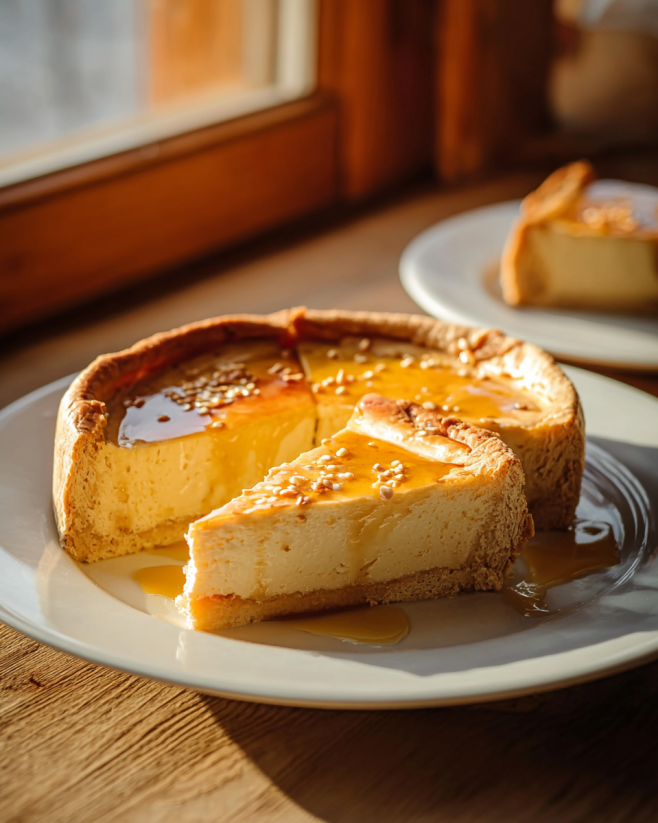
If you close your eyes and imagine the perfect dessert, what do you see? Maybe it’s something warm and cozy, something that smells like a mix of sweet spices and pure sunshine. If you’re anything like us, you’re picturing a slice of Golden Greek Honey Pie. This incredible dessert—often called a version of Galaktoboureko or Melopita—is more than just a pastry; it’s a taste of history, wrapped in crispy, buttery layers and filled with a creamy, spiced custard.
Have you ever wondered what it would be like to bake a piece of history right in your own kitchen? This pie offers you that chance. It’s a beautiful combination of textures: the shattering crispness of the thin pastry outside and the smooth, comforting semolina custard filling inside. And then, there’s the final touch: a generous drizzle of warm, golden honey, sprinkled with crunchy sesame seeds. It truly feels like a treasure. We’re going to walk you through every step of making this fantastic dessert, giving you all the secrets to success, even if you’ve never worked with delicate pastry before. Get ready to bake a memory!
Why This Dessert Feels Like Home: The Heart of Greek Sweets
Every culture has a food that makes you feel instantly warm and safe. In Greece, many of those comforting sweets are called “syrup desserts.” These are pastries that are baked until perfectly golden and then immediately drenched in a sweet, sometimes spiced, syrup. This Golden Greek Honey Pie uses honey as its primary sweetener, which is a classic Greek tradition.
Think about the feeling you get when you bite into something truly comforting. This pie delivers that exact feeling. It’s rich, but not too heavy, and the mixture of cinnamon and nutmeg in the creamy filling is like a cozy hug on a plate. When you share a slice of this pie, you’re not just sharing dessert; you’re sharing a tradition that dates back hundreds of years. You’re offering a slice of golden sweetness that makes everyone slow down and smile.
The Ancient Roots of Sweetness: Honey in Greek History
A Gift from the Gods: Honey’s Role
Before sugar was easy to find, the ancient world relied on honey for sweetness. The Greeks especially treasured it. Honey wasn’t just food; it was considered a gift from the gods and was often used as an offering. They even believed that the great poet Homer ate honey to help him write his famous epics!
When you drizzle honey over your freshly baked pie, you are connecting with that deep history. You’re using an ingredient that has been central to Greek life and cooking for thousands of years. This isn’t just a recipe; it’s a culinary journey across time. It tells a story about how resourceful cooks used what was abundant—like milk, semolina, and local honey—to create dishes that have lasted generations. Understanding this rich heritage makes the final product taste even sweeter. The combination of crispy layers and that distinct, aromatic sweetness is what makes this kind of Mediterranean sweets so famous around the world.
Getting Ready to Bake: Your Mission Checklist
Preparation is key to baking success, especially when you are working with delicate ingredients like phyllo. Think of yourself as a master pastry architect. You need all your tools and materials laid out perfectly before you start building. Taking a few extra minutes to measure everything and gather your tools will save you a lot of time and frustration later on.
Gathering Your Treasury: The Essential Ingredients
We are going to use two main components here: the buttery, flaky pastry layers and the creamy, spiced filling. The ingredients are simple, but when they come together, they create something truly spectacular. Make sure all your ingredients, especially the eggs and milk, are ready to go.
| Ingredient | Quantity | Purpose in the Pie | Notes |
|---|---|---|---|
| Phyllo Dough | 8 sheets | The outer crispy shell | Keep covered with a damp towel while working. |
| Unsalted Butter | 1 cup, melted | Provides flavor and texture | Must be melted for brushing. |
| Semolina Flour | 1 cup | The thickener for the creamy filling | Gives the custard its signature texture. |
| Large Eggs | 3 large | Binds the filling and adds richness | Use room temperature eggs if possible. |
| Granulated Sugar | 3/4 cup | Sweetener for the custard | Balances the spices and milk. |
| Whole Milk | 2 cups | The base of the custard | Provides creaminess and richness. |
| Ground Cinnamon | 1 tsp | A classic Greek spice | Essential for the warm flavor. |
| Ground Nutmeg | 1/2 tsp | Adds depth and aroma | Compliments the cinnamon beautifully. |
| Salt | Pinch | Enhances all the other flavors | Don’t forget this little bit! |
| Honey (for topping) | 1/2 cup, warmed | The sweet, final glaze | Use high-quality honey for the best taste. |
| Sesame Seeds | 2 tbsp, toasted | The crunchy, aromatic topping | Adds a beautiful finish and texture. |
Setting the Stage: Essential Tools and Prep
Before you touch the phyllo, you need to prepare your baking environment.
- Preheat the Oven: Turn your oven on to 350°F (175°C). It’s important that the oven is fully heated before the pie goes in so it bakes evenly and the pastry crisps up immediately.
- Grease the Dish: Get a 9×13-inch baking dish and lightly grease it. You can use butter, cooking spray, or a small amount of the melted butter you have set aside. This step prevents the bottom layer of your delicious pastry from sticking to the pan.
- Melt the Butter: Melt the required cup of unsalted butter and keep it nearby with a pastry brush. The melted butter is what creates those famous, flaky, buttery layers.
- Phyllo Management: Unroll your phyllo dough carefully. Because it is so thin—like paper—it dries out quickly. Crucially, place a slightly damp kitchen towel over the remaining sheets of phyllo while you work. This simple step is the key to preventing the dough from cracking and tearing as you build your base.
Mastering the Crispy Foundation: Working with Phyllo
Phyllo dough (often called phyllo pastry) is the delicate secret to many Greek pastries. It’s paper-thin and must be handled with care. If you handle it too roughly or let it dry out, it will break. But don’t worry—even if it tears a little, the butter and the other layers will hide your mistakes!
The Phyllo Whisperer: Tips for Handling Thin Pastry
- Patience is Key: Take your time. Don’t rush when separating the sheets.
- Keep it Cool, but Not Cold: If the phyllo is straight out of the fridge, it’s more likely to crack. Let it sit in its packaging on the counter for about 30 minutes before you start.
- The Damp Towel Rule: Seriously, keep that damp towel nearby and use it! Whenever you are focused on mixing the custard, make sure the phyllo is covered.
Layer by Layer: The Buttering Technique
The buttering process is what turns the thin, flavorless sheets into a rich, golden crust. You need to brush each layer generously, but not so much that the butter pools in the pan.
- The First Sheet: Place the first sheet of phyllo dough in your prepared baking dish. If it hangs over the edges, that’s okay! Just let it hang for now.
- Butter Up: Take your pastry brush and dip it into the melted butter. Gently and evenly brush the entire surface of the sheet.
- Repeat Six Times: Now, place the second sheet right on top of the first. Gently smooth it out. Brush it with butter. You will repeat this for a total of seven stacked sheets at the base. This provides a strong, sturdy, and wonderfully flaky foundation for your creamy center. Having these multiple buttery layers is essential for the final texture.
Creating the Golden Heart: The Smooth Semolina Custard
The filling is the soul of your pie. It’s a smooth, creamy custard thickened with semolina flour. Semolina gives it a unique texture that’s sturdier and less wobbly than a standard flour-based custard. This semolina custard is what sets the Golden Greek Honey Pie apart from many other desserts.
The Secret to Smoothness: Whisking Without Worry
The key here is to mix the ingredients thoroughly before they hit the heat.
- Dry Meets Wet: In a large mixing bowl, you will whisk together your dry ingredients (semolina, sugar, salt, cinnamon, and nutmeg) with the wet ingredients (eggs and milk).
- Whisking Rhythm: Whisk until everything is perfectly smooth. You want to make sure there are no lumps of semolina flour hiding out. Lumps will turn into hard bits in the oven, and we want a filling that’s soft and dreamy. If you find yourself struggling to get rid of lumps, let the mixture sit for about 5 minutes; sometimes the semolina just needs a moment to absorb some of the liquid before you whisk again.
Spice it Right: The Flavor Profile of Cinnamon and Nutmeg
The combination of cinnamon (1 teaspoon) and nutmeg (1/2 teaspoon) is the signature flavor of many traditional Greek desserts.
- Cinnamon’s Warmth: Cinnamon brings a strong, sweet warmth that goes perfectly with honey. It’s comforting and instantly recognizable.
- Nutmeg’s Depth: Nutmeg adds a deeper, slightly more mysterious layer of flavor. It rounds out the sweetness and prevents the custard from tasting flat.
- The Perfect Balance: This exact measure ensures the filling is spiced just enough to be delicious, but not so much that it overpowers the rich milk and the future honey glaze. The aroma of these spices as the pie bakes will fill your entire home—it’s truly magical!
The Assembly Line: Building Your Dessert Masterpiece
Now that you have your strong base and your smooth filling, it’s time to bring the two together. This is the moment where your individual ingredients transform into a single, magnificent dessert.
Securing the Base: The First Seven Sheets
Remember those seven buttered layers? They are now ready to receive the filling. Make sure they cover the bottom of the dish evenly. If the edges are slightly uneven, don’t worry, that just adds to the rustic charm of your homemade pie. The melted butter holds everything together tightly.
Pouring the Custard: Making it Even
Take your whisked semolina mixture and carefully pour it over the phyllo base.
- Pour Gently: Pour slowly to avoid disturbing the layers underneath.
- Level Surface: If the custard seems uneven, gently tilt the baking dish a little until the liquid settles into a perfectly level surface. You want the pie to bake flat, not on a slope! The semolina will ensure this filling is perfectly creamy when baked.
The Grand Finale Layer: Sealing the Pie
You only have one sheet of phyllo left (since you started with eight and used seven for the bottom). This single sheet needs to be treated just like the others:
- Place the Top Sheet: Carefully lay the last sheet of phyllo over the custard. This top layer will act as the crispy seal for your creamy filling.
- Generous Buttering: Brush the top layer generously with the rest of your melted butter. Don’t be stingy here; this butter is what will turn the top into a spectacular golden brown crust.
The Important Score: Guiding the Steam
This step is quick, but absolutely essential for the perfect pastry preparation.
- Scoring: Take a sharp knife and lightly score the top layer of the pastry. Lightly means you cut only through the top phyllo sheet(s), not all the way down into the custard.
- Why We Score: This scoring serves two purposes:
- Steam Escape: It allows steam from the wet custard filling to escape during baking, which helps the phyllo on top get crispy instead of soggy.
- Pre-Portioning: It marks where you will slice the pie later. Scoring before baking prevents the baked, crispy top crust from shattering messily when you cut it after it’s cooled.
The Golden Transformation: Baking to Perfection
Your assembled Golden Greek Honey Pie is now ready for the oven. This is where the magic happens—the liquid filling will turn solid, the phyllo will puff up, and your kitchen will start smelling like the best bakery in the Mediterranean.
Oven Watch: Signs Your Pie is Done
The pie bakes for about 40 to 45 minutes at 350°F (175°C). Here’s what you should look for:
- Color: The top crust should be a deep, beautiful golden brown. Don’t take it out too soon if it’s pale; that golden color means the crust is crisp.
- Firmness: If you gently shake the dish, the center of the pie should not wobble like liquid jelly. It should look and feel set. If you insert a clean toothpick or thin knife into the filling, it should come out mostly clean, though the center might still be very slightly damp (that’s the richness of the custard).
- Puffiness: The phyllo around the edges will likely puff up significantly. That’s a good sign! It means the butter has done its job and created those airy pockets.
Troubleshooting: Why is My Pie Soggy?
Sometimes, even the best bakers run into small problems. If you find your pie is coming out a little too soft or soggy, here are a few things that might have happened and how to fix them next time:
- Not Enough Butter: If you didn’t use enough melted butter between those seven bottom layers, they might absorb too much moisture from the wet custard and become chewy instead of crispy. Be generous with the butter!
- Oven Temperature Fluctuation: If your oven was too cool, the pie might steam instead of bake. Always use an oven thermometer to ensure the temperature is correct.
- Cutting Too Deep: If you cut the top layer too deep before baking, the custard might have oozed up and made the top crust soggy. Remember: score the top, don’t slice it.
The Sweetest Finish: Drizzling the Warm Honey
Once the pie is out of the oven, the most satisfying step remains: the honey bath. This is what truly earns this dessert the name Golden Greek Honey Pie and turns it into a classic syrup-soaked dessert.
The Perfect Glaze: Warming the Honey Just Right
This is an important detail! You should warm your 1/2 cup of honey before drizzling.
- How to Warm: You can pour the honey into a small bowl and microwave it for 15-20 seconds, or put it in a small saucepan over very low heat for a minute or two.
- The Magic Reaction: You want the honey to be warm and thin, not piping hot. When the warm, thin honey hits the warm pie, it soaks in quickly and evenly. This creates the signature glistening, sweet glaze that covers the entire surface and sinks down slightly into the custard, adding a layer of flavor that’s unbeatable.
The Final Flourish: Toasted Sesame Seeds
The sesame seeds aren’t just for decoration; they add a wonderful toasted flavor and a satisfying crunch that contrasts beautifully with the soft filling and saturated pastry.
- Toasting Tip: You can toast the 2 tablespoons of sesame seeds in a dry frying pan over medium heat for about 3–5 minutes. Keep them moving! As soon as they smell nutty and turn light golden, take them off the heat immediately so they don’t burn.
- The Sprinkle: Once the honey has been drizzled, immediately sprinkle the toasted sesame seeds over the top. This gives them a chance to stick to the honey before it completely cools and sets.
Enjoying Your Creation: Serving and Storing
After all your hard work, it’s time to enjoy the fruits of your labor!
Warm or Cold? Finding the Best Way to Serve
When you take the pie out of the oven, let it cool for about 10 minutes before drizzling the honey and sprinkling the seeds. After that, you have a choice:
- Serving Warm: Serving it warm is heavenly. The custard is softer, and the spices and honey aroma are strongest. It’s the most traditional way to eat this dessert.
- Serving at Room Temperature: Many people prefer to let the pie cool completely to room temperature. This allows the custard to fully set and the phyllo to firm up, making the slices cleaner and easier to handle. This dessert is fantastic either way!
How Long Does the Magic Last? Storage Tips
This baked sweet treat is best eaten within a few days.
- Countertop: If you plan to eat it within 1-2 days, you can keep it covered loosely at cool room temperature.
- Refrigerator: For longer storage, cover it tightly and keep it in the fridge for up to 4 days.
- Reheating: If you store it in the fridge and want to bring back the crispy texture of the phyllo, you can reheat individual slices in a toaster oven or a standard oven at about 300°F (150°C) for a few minutes. Microwaving will make the pastry soft, so try to avoid it!
Deep Dive: The Science of Semolina
Why does this recipe specifically call for semolina flour instead of regular all-purpose flour? This is a great question that gets to the heart of what makes this Greek dessert so special.
Semolina vs. Regular Flour: Understanding the Difference
Regular flour is ground from soft wheat, resulting in a very fine powder that creates light, tender textures in cakes and bread. Semolina, however, is coarsely ground from durum wheat, which is the same type of wheat used to make pasta!
- Structure and Texture: Because semolina is coarser, it doesn’t dissolve completely into the liquid as regular flour does. When you cook it with milk, it creates a very thick, almost pudding-like consistency. In this pie, it prevents the creamy filling from becoming watery or running out when you slice it. It gives the custard a lovely, gritty (in a good way!), satisfying texture.
- Golden Color: Semolina naturally has a deeper yellow, almost golden color. This contributes to the beautiful color of your finished custard, making it look rich and delicious even before the honey is added. This ingredient is key to achieving that authentic texture you expect in a Greek milk pie.
Perfect Pairings: What to Serve with Your Pie
This pie is wonderful on its own, but you can elevate the experience by serving it with a perfect companion drink.
- Greek Coffee: A classic, strong, slightly froasty Greek coffee (often called a frappe) provides a bitter contrast that cuts through the sweetness of the honey and spices perfectly.
- Hot Tea: A simple cup of black tea or a calming herbal tea is a great choice. The warmth of the tea complements the warmth of the dessert.
- Cool Yogurt: A small dollop of cool, thick Greek yogurt on the side can be a wonderful pairing. The tartness of the yogurt balances the rich sweetness of the honey syrup and the custard.
Understanding the Nutritional Snapshot (Example)
While we can’t give you exact numbers without knowing every ingredient’s specific brand, here is a general idea of the components that make up this comforting dessert. This pie is a wonderful treat that brings joy, but it’s important to understand the ingredients you are enjoying!
| Component | Main Nutrient Contribution | Notes on Ingredients |
|---|---|---|
| Phyllo & Butter | Carbohydrates & Fats | Provides energy and creates the desirable flaky texture. |
| Semolina | Complex Carbohydrates & Protein | The main source of texture and substance in the custard. |
| Whole Milk & Eggs | Protein, Calcium, & Fats | Essential for the richness and nutritional value of the filling. |
| Honey | Simple Sugars (Sweetness) | An all-natural sweetener that gives the pie its signature flavor. |
| Sesame Seeds | Healthy Fats & Minerals | Adds a small boost of crunch, flavor, and nutrients. |
Beyond the Recipe: Variations to Try
Once you have mastered the original Golden Greek Honey Pie, you might want to try some fun ways to change it up and make it your own!
H4: Citrus Zest Infusion
Before you pour the custard mixture over the phyllo, whisk in the zest of one lemon or one small orange. The bright, fresh citrus flavor adds a wonderful zing that complements the cinnamon and nutmeg beautifully. It’s a great way to make the pie taste even more like sunshine!
H4: Nutty Base Layer
Before you put down the first phyllo sheet, you could sprinkle a thin layer of finely crushed walnuts or almonds mixed with a tablespoon of sugar in the bottom of the dish. The nuts toast as the pie bakes, giving the base an extra crunchy, flavorful layer.
Frequently Asked Questions (FAQ)
Here are some common questions people have when preparing this classic Greek milk pie.
Q1: Can I make the phyllo dough myself?
Phyllo dough is extremely difficult to make by hand because it has to be stretched paper-thin. It is highly recommended that you purchase pre-made, frozen phyllo dough from the freezer section of your grocery store. It saves a lot of time and effort!
Q2: I don’t have semolina flour. Can I use cornstarch or regular flour instead?
You can substitute them, but the texture will be different. Regular flour or cornstarch will create a much softer, looser custard (more like a French cream filling). Semolina is key for the thicker, slightly coarser, traditional texture. Look for semolina flour in the baking or bulk section of specialty food stores.
Q3: How do I prevent the phyllo from tearing while I work with it?
The absolute best way is to keep the unused sheets covered with a slightly damp, clean kitchen towel at all times. Work quickly but gently. Even if you get small tears, don’t panic! Just put the sheet down, cover the tear with a little extra butter, and place the next sheet right on top. No one will ever notice your pastry preparation struggles!
Q4: Can I use less butter to make it healthier?
While you can slightly reduce the butter, remember that the butter serves a crucial purpose: it is the agent that separates the paper-thin sheets, allowing them to puff up into crispy, flaky layers. Reducing it too much will result in a chewy, dense pastry instead of the signature crispy texture you are looking for.
Q5: Should I use a specific type of honey?
The type of honey matters a lot since it is the dominant final flavor. Greek cooks often use thyme honey, which has a distinct, beautiful herbal aroma. If you can’t find thyme honey, choose a good quality, local wildflower honey. Its robust flavor will complement the spices better than a very mild, commercially processed honey.
Q6: Can I prepare this pie ahead of time?
You can prepare the pie up to the point of baking. Assemble the buttered phyllo layers and the custard in the dish, cover it tightly with plastic wrap, and refrigerate it for up to 24 hours. When you’re ready to bake, let it sit on the counter for about 30 minutes while the oven preheats, then bake as directed. It’s best to add the honey and sesame seeds only right before serving.
A Golden Legacy: Share Your Sweetness Today!
You now have all the knowledge and tips you need to create a truly beautiful and delicious Golden Greek Honey Pie. This recipe is a fantastic project that results in a dessert that is perfect for holidays, gatherings, or just a quiet evening at home. The aroma alone is enough to lift your spirits!
From preparing the delicate phyllo pastry to whisking the smooth semolina custard and finally, watching the honey glaze sink in, you have completed a wonderful culinary journey. Don’t just keep this baked sweet treat to yourself! Find a quiet afternoon, gather your ingredients, and commit to baking this beautiful piece of Greek culture.
Your Actionable Step: Go check your pantry and see if you have all the spices—cinnamon, nutmeg, and salt. If you do, pick a day this week to try this recipe! You won’t regret creating this golden brown masterpiece. Let us know how your semolina custard turned out in the comments below!
Greek Melopita (Honey Pie)
Ingredients
Equipment
Method
- Preheat the oven to 350°F (175°C). Grease a 9×13-inch baking dish.
- Build the Base: Lay one sheet of phyllo in the dish and brush generously with melted butter. Repeat with 6 more sheets, stacking them neatly.
- Make Filling: In a mixing bowl, whisk together the semolina flour, eggs, sugar, milk, cinnamon, nutmeg, and salt until smooth.
- Pour Filling: Pour the semolina mixture evenly over the prepared phyllo base.
- Top Layer: Cover the filling with the remaining sheet of phyllo, brushing it generously with butter. Lightly score the top with a knife.
- Bake: Bake for 40–45 minutes, or until the top is golden brown and the filling is set.
- Cool: Let the pie cool for 10 minutes in the pan.
- Finish and Serve: Drizzle the warmed honey evenly over the pie and sprinkle with the toasted sesame seeds. Slice and serve warm or at room temperature.
